Three to six months before: plan and research
The earlier you start, the more choice you have over dates, shipping method and costs. International moves have more moving parts than a local one, and some paperwork takes weeks.
- Check your right to live and work there. Visas, residence permits and registration rules vary by country.
- Check your passport has plenty of validity left for everyone travelling.
- Research customs rules for your destination: what you can bring, what is restricted and what paperwork is needed to import household goods.
- Get a quote. Use Get a quote or call 01202 570970. If you live in a BH postcode or DT11 we will book a free home visit so we can measure the volume and plan the shipment; everywhere else you send short room videos or photos.
- Decide what to take. Furniture that suits a UK house may not suit a flat in Spain or a house in Canada. Sell, donate or store what you will not need.
Our decluttering and downsizing guide can help with that last step.
Understand customs before you pack
Every country sets its own rules on what can be imported, what duty or tax may be due and what forms you need. Getting this wrong is the most common cause of delays at the other end.
- Make a detailed inventory. Customs usually need a list of what is in the shipment, box by box.
- Check restricted items. Food, plants, alcohol, medicines, firearms and some wooden items often have rules or are banned.
- Keep proof of ownership and residence that your destination may ask for, such as purchase receipts or a tenancy or property contract.
- Moving within Europe from the UK now involves customs paperwork too, so do not assume it will be as simple as a UK move.
Fiona, who runs our international moves with Chris, holds a BTEC in Customs Export and Import Procedures, so we can talk you through what your destination expects.
Choose how your belongings will travel
How your things travel depends on where you are going, how much you are taking and how quickly you need it.
- By road across Europe. Moves to France, Spain, Portugal, Germany, Italy and other European countries go by road. We survey, plan and manage the move, and the European transport is carried out with trusted partner removal firms.
- By sea for worldwide moves. Sea freight suits larger shipments to places like Australia, the USA, Canada, South Africa and Dubai. It is economical for volume but takes longer, and partner agents at the destination handle customs clearance and delivery.
- By air for urgent items. Air freight is fast but expensive, so it is usually kept for a few essentials.
Pack a suitcase for the first weeks with clothes, documents, medicines and anything you cannot be without. See our European removals and worldwide removals pages for more.
Arrange your own marine insurance
For shipping abroad, marine insurance must be arranged by you, the customer. 1st Choice Removals does not provide marine insurance, so please sort this out yourself before your belongings are shipped.
- Get quotes from specialist insurers who cover household goods in transit overseas.
- Check what is covered: loss, damage, total loss of the vessel, and items in storage at either end.
- Use your inventory to set values, and note high-value items separately.
- Read the terms on packing. Some policies pay out differently for items you packed yourself.
Take photographs of valuable items before they are packed. It makes any claim easier to support.
Admin to sort out before you leave the UK
Alongside the move itself, there is a list of people to tell and accounts to close or change.
- Tax and pensions. Tell HMRC you are leaving and check your pension arrangements.
- Banking and money. Keep a UK account open if you will still have UK income. For moving large sums, our partner Regency FX offers currency exchange.
- Utilities, council tax, TV licence and broadband. Give notice and take final meter readings.
- Post. Set up mail redirection and update your address with anyone who still needs to reach you.
- Health. Order repeat prescriptions and ask your GP and dentist for copies of your records.
- Driving. Check whether your UK licence is accepted or needs exchanging.
- Pets. Check the destination's rules on vaccinations, microchips and paperwork well in advance.
The final weeks and moving day
In the last month, focus on packing and on keeping your essentials separate from the shipment.
- Confirm the collection date, delivery address and contact numbers at both ends.
- Keep passports, visas, customs forms, insurance documents and your inventory in a folder that travels with you.
- Use up food and dispose of anything you cannot ship, such as paint, gas bottles and aerosols.
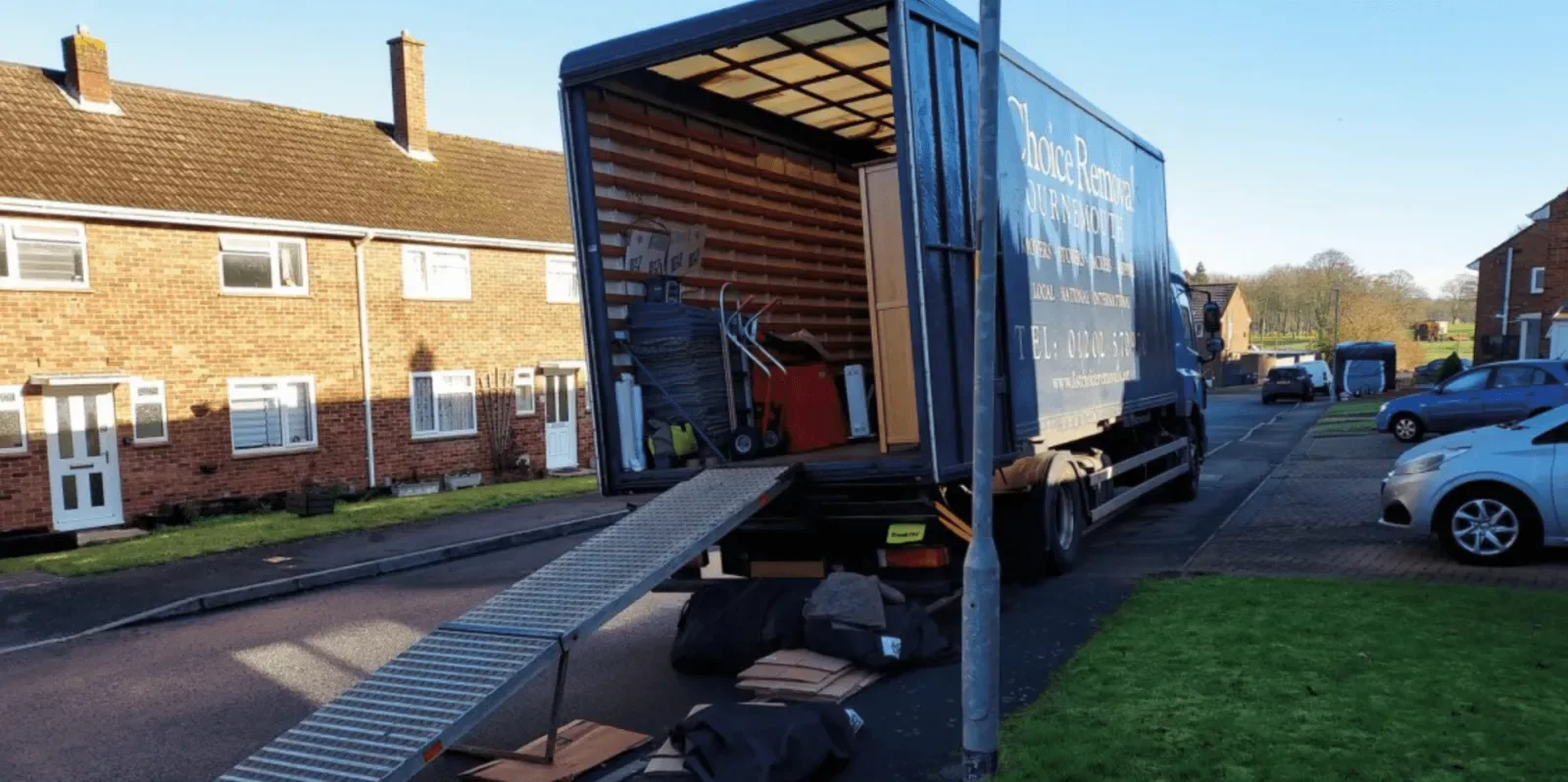
- On moving day, your home is protected with floor sheeting and padding, fragile items are wrapped properly and the shipment is loaded.
- Unpacking at your new home and furniture dismantling and reassembly are available as optional extras, charged on top of your quote.
For specialist items such as pianos, antiques or artwork, we can build bespoke wooden crates. Our specialist removals page explains more.